Monday, June 14, 2010


Thursday, April 8, 2010
New iPhone system, with multi-tasking, unveiled
The new operating system, iPhone OS 4, will be released to developers this week and to consumers this summer. It will give developers access to calendar, photo library, still image and video data, and includes features aimed at helping apps run faster.
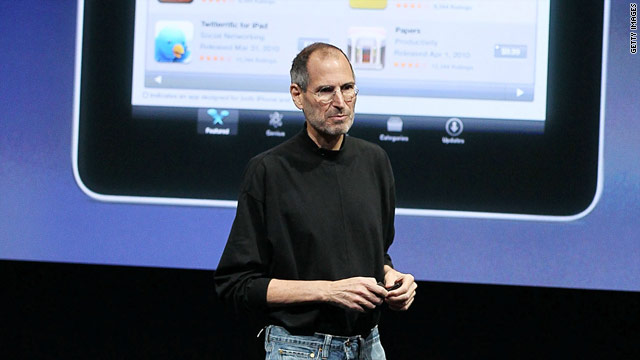
As expected, the new OS will support multitasking of apps.
"We weren't the first to this party but we're going to be the best, just like cut and paste," said Apple CEO Steve Jobs, alluding to the fact that cut-and-paste hadn't been available until a year after the first iPhone launched.
"It's really easy to implement multitasking in a way that drains battery life. If you don't do it just right your phone's going to feel sluggish and your battery life is going to go way down. We've figured out how to implement multitasking of third-party apps and avoid those things."
With the new OS, users will be able to press the home button twice to see a menu of all the currently active apps, which appears as a bar along the bottom of the screen. Tapping one of the apps takes you directly into that app. Apps can remain running in the background.
Apple demonstrated how you can keep listening to music in Pandora while doing other things on the phone, and how the phone could deliver push notifications to alert users to an incoming Skype call.
"It was really simple to implement. Just a dozen lines of code," said Skype's head of product development David Ponsford.
To address privacy concerns, the OS will also let you know (via a notification on the app's icon) when an app running in the background has requested your location from the device's GPS.
The announcement comes less than a week after Apple's launch of its tablet computer, the iPad. Jobs said the company had sold 450,000 iPads to date, and that users have downloaded more than 1 million iPad applications and over 650,000 digital books from the iBooks store.
Jobs also added that the company has sold more than 50 million iPhones and 35 million iPod Touches.
The iPhone, iPod Touch, and iPad all run iPhone OS 3.0. The operating system is based on an OS X core, but with a touch-centric interface and optimizations aimed at increasing screen responsiveness and maximizing battery life.
The current iPhone OS has been widely criticized for its lack of support for full multitasking: It only allows a few core apps, such as iPod and Mail, to run in the background while another app is active. The OS also restricts add-on software to apps available through Apple's App Store.
The App Store currently contains 185,000 apps, Jobs said, adding than users have downloaded more than 4 billion apps from it to date. About 3,500 of those apps are optimized for the iPad.
The new OS also gives users the ability to group apps in folders, instead of just laying them out on the home screens.
Other features planned for iPhone OS 4 include a 5x digital zoom feature in the camera, and the ability to tap to focus in video. (Tap to focus was already available for still images in iPhone OS 3.)
Thursday, January 28, 2010
Report Bing may replace Google on iPhone
Report: Bing may replace Google on iPhone
BusinessWeek reports Apple, Microsoft have been talking for weeks

NEW YORK/SAN FRANCISCO - Apple is talking with Microsoft about making it the default search engine provider for the iPhone, replacing Google, BusinessWeek reported on Wednesday.
(Msnbc.com is a joint Microsoft - NBC Universal venture.)
If Apple displaces Google from its preferred status on the smartphone, it would be perhaps the clearest sign of the growing tension between two Silicon Valley icons, which were considered allies in a common cause against Microsoft.
Talks between Microsoft and Apple have been going on for weeks, the article said, citing two people familiar with the matter. Negotiations might not conclude quickly and might still fall apart, the article said.
Microsoft and Google declined to comment. Apple was not immediately available for comment.
Microsoft's Bing search engine, which debuted last year, is trying to wrest market share from Google, the leader in Internet search.
Apple's rivalry with Microsoft dates back years, though they work together in certain areas of the software market.
In contrast, the Apple-Google rift is only emerging. The companies compete on a number of fronts, including operating systems and the fast-growing smartphone market.
"Obviously with Google and Apple, they seem to be having some friction," said ThinkEquity analyst Vijay Rakesh.
Until recently, replacing Google with Bing would have been seen as unreasonable, but now such a move might be possible, said Oppenheimer & Co analyst Yair Reiner.
"While Microsoft and Google pose similar threats to Apple, Google's budding success with Android and Chrome may represent more immediate dangers to Apple, which could push it into the arms of Microsoft," Reiner wrote in a research note.
Google and Apple have lived in friendly coexistence for years as each became leaders in their arenas. Google is the default search engine on Apple's desktop and laptop computers.
Their ties run deep. Google director Ann Mather was chief financial officer at animation company Pixar, while Apple founder Steve Jobs was CEO. Former U.S. Vice President Al Gore is an Apple board member and also a senior adviser to Google.
But Google Chief Executive Eric Schmidt resigned from Apple's board in August, even as Google increased its presence in Apple's markets.
Google has been gaining strong support from handset makers and operators with its Android mobile operating system. Earlier this month, the search giant unveiled its Nexus One smartphone, which will compete with Apple's iPhone.
Google recently agreed to buy mobile advertising company AdMob for $750 million, a company that Apple reportedly pursued. Apple bought AdMob competitor Quattro Wireless.
Apple is working on ways to manage ads displayed on its mobile devices, a move that would challenge Google's advertising business, the BusinessWeek article said.
"Apple sees Android as a competitive platform driving competitive devices and it recognizes that Microsoft is desperate to gain search market share," said Clayton Moran, an analyst at Benchmark.
"Microsoft, I'm sure, will give Apple favorable economics so strategically and financially it could make good sense for Apple," said Moran.
The terms of Google's deal with Apple are unknown, though browser toolbar deals in the PC world typically involve the search provider paying an upfront fee to the PC maker, said RBC Capital Markets analyst Ross Sandler.
The search provider makes the money back when PC users click on search ads.
IPhone searches using Google's search bar appear to return more standard, unpaid results than paid search ads, suggesting that Google might lose money on the deal, Sandler said.
For Microsoft to displace Google on the iPhone, "they're going to have to be willing to lose more money than Google is losing," Sandler said
Microsoft has invested hundreds of millions of dollars in its money-losing online business as it tries to gain an edge in Internet-based advertising markets.
"They're both playing the same game," Sandler said of Microsoft's and Google's mobile plans. "They both need to be there longer term, it's just a question of how much do you have to give up today in order to chip away at that longer term vision."
Wednesday, January 27, 2010
Apple announces ‘iPad’ tablet PC - a large iPhone?


